A driveway alarm acts as an early warning system for your home, alerting you when someone or something approaches your property. Whether you’re a homeowner concerned about package theft, unexpected visitors, or wildlife wandering onto your land, a reliable driveway alarm provides peace of mind without the cost of a full security system. From wireless sensors to solar-powered options, today’s best driveway alarms blend affordability with smart technology. This guide walks you through what matters when choosing a driveway alarm and why the right one fits your home’s specific needs.
Table of Contents
ToggleKey Takeaways
- A driveway alarm acts as a motion-sensor early warning system that detects approaching visitors or package thieves without requiring professional installation or monthly monitoring fees.
- The best driveway alarm for your home should detect motion 40–100 feet away depending on property size, with battery life between 6–18 months or solar-powered options for maintenance-free operation.
- Wireless driveway alarms dominate because they install in minutes with zero electrical work, though they require periodic battery replacement unlike wired systems that need professional installation at higher cost.
- Sensor placement at 3–5 feet high with a clear view of approaching traffic, adjustable sensitivity settings, and receiver positioning in high-traffic home areas maximize reliability and reduce false alerts.
- Quality driveway alarms cost $30–100, support smartphone notifications on select models, and should be tested for two weeks before expanding to secondary property entrances.
What Is A Driveway Alarm And Why You Need One
A driveway alarm is a motion-sensor device that detects activity on your driveway or property entrance and sends an alert to a receiver or smartphone. When movement triggers the sensor, the system emits a chime, alert sound, or notification, giving you real-time awareness of who or what is approaching your home.
Unlike full security systems that require professional installation and monthly monitoring fees, driveway alarms are standalone units you can install in minutes. They’re especially useful for homes set back from the road, long driveways, or rural properties where you can’t easily see visitors arriving. Package thieves are increasingly bold, deploying a visible sensor often deters them before they even approach. Parents with young children also benefit from being alerted if a child wanders toward the drive, and property owners can monitor unauthorized gate or fence access.
How Driveway Alarms Work
Most driveway alarms operate on a simple principle: an infrared or microwave sensor detects heat signatures and movement within its detection zone. When motion is registered, the transmitter sends a wireless signal to a receiver inside your home. The receiver then triggers an audible alert, ranging from a soft chime to a loud alarm, or sends a notification to your smartphone if the system is Wi-Fi enabled.
The sensor is placed at the driveway entrance or property perimeter, while the receiver sits indoors or in your garage. Range varies significantly by model: budget options typically detect motion 20–30 feet away, while premium models with long-range sensors can monitor 50–100 feet or more. Some systems use passive infrared (PIR) sensors, which detect body heat, while others use microwave sensors that penetrate light rain or fog for more reliable detection in variable weather.
Top Driveway Alarm Features To Look For
When evaluating driveway alarm options, prioritize detection range first. A best long range driveway alarm should detect vehicles and people from at least 40 feet away, ideally 50–100 feet if your driveway is long. Check the sensor type: PIR sensors work well in stable temperatures, while microwave sensors handle weather changes better but can trigger on wind-blown debris.
Battery life matters too. Solar-powered sensors eliminate battery replacement entirely, but they require consistent sunlight exposure. Alkaline battery models typically last 6–18 months depending on activity frequency and sensor type. Look for battery-low indicators so you’re not caught with a dead sensor.
Receiver range determines how far indoors you’ll receive alerts. A weak receiver won’t reach your bedroom if it’s at the far end of your home. Quality units transmit reliably 100+ feet through walls: budget models may cut out at 50 feet. If smartphone notifications matter to you, confirm the model integrates with iOS and Android, not all systems do.
False-alarm sensitivity is crucial. Large animals, passing cars, or blowing debris shouldn’t trigger constant alerts. Adjustable sensitivity lets you dial in detection to pets’ weight or motion patterns. Durable, weather-sealed housings (rated IP65 or higher) survive freeze-thaw cycles and heavy rain without corroding. Finally, consider aesthetic design if the sensor sits visibly near your driveway entrance.
Wireless Vs. Wired Driveway Alarms
Wireless driveway alarms dominate the market because they require zero installation complexity. You mount the sensor with weatherproof brackets or stakes, insert batteries, and pair it to the receiver, most setup takes under 10 minutes. No digging trenches, running cables, or hiring an electrician. Wireless systems are also flexible: you can relocate the sensor if your property changes or if you discover the initial spot misses traffic angles.
The trade-off is battery dependence and potential signal interference. Batteries need replacement every 6–18 months (or rely on solar charging for maintenance-free operation). If your home has thick walls or is far from the sensor, wireless range can drop, steel-frame construction or metal buildings especially challenge RF signals. Most quality wireless systems operate on the 900 MHz frequency, which penetrates obstacles better than 2.4 GHz, but interference from cordless phones or baby monitors remains possible in rare cases.
Wired alarms, by contrast, need no battery maintenance and offer uninterrupted power. A licensed electrician runs low-voltage (typically 12V or 24V) cabling from an interior power supply to the sensor, a job that costs $200–500 depending on driveway length and trench depth. Permit requirements vary by jurisdiction, and trenching itself introduces labor. Wired systems make sense for permanent installations where you’ll never relocate, but most homeowners prefer the simplicity of wireless. For DIY installation, wireless is the clear choice.
Best Driveway Alarm Options For Different Home Types
Rural and long-driveway homes benefit most from wireless motion sensors with 50–100 foot range. These homeowners often can’t see approaching vehicles from inside, making early warning essential. Solar-powered sensors are ideal here because consistent daylight exposure keeps them charged year-round. Suburban homes with shorter driveways (under 40 feet) can use budget-friendly models with 30–50 foot range and standard battery backup.
Multi-property estates or homes with gated entrances should consider dual-sensor systems where one unit monitors the gate and another covers the driveway. Some manufacturers offer kits with multiple receivers so alerts reach different zones of your home. Smart home users prefer Wi-Fi-enabled driveway alarms that integrate with existing home automation, think Alexa or Google Home compatibility for voice announcements or app-based notifications.
Apartment dwellers and townhouse residents often face restrictions on exterior mounting. Portable, weatherproof sensors designed for renters work here: they use adhesive mounting pads instead of hardware screws and operate fully wirelessly. For those worried about aesthetics, black or metallic finishes blend better with modern homes than white plastic housing.
According to driveway alarm reviews, reliability and ease of troubleshooting matter as much as features. Models from established manufacturers typically offer better customer support and replacement batteries readily available. Test the receiver’s alert sound before purchasing, some chimes are too quiet to hear in garage workshops, while others are startlingly loud indoors. Reading verified user feedback helps identify real-world issues like false-trigger patterns or connection drops that spec sheets won’t reveal.
Installation And Setup Tips For Homeowners
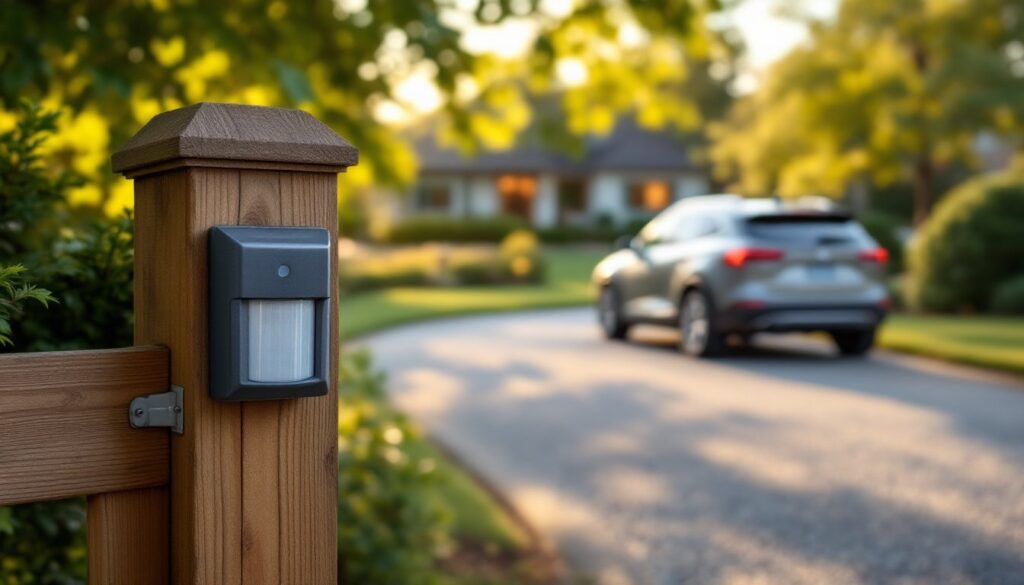
Installing a wireless driveway alarm requires minimal tools: a drill with bits for mounting brackets, a level, weatherproof fasteners (lag bolts or concrete anchors, depending on mounting surface), and a wrench or socket set if brackets need tightening. Start by choosing the sensor location: mount it 3–5 feet high on a post, gate pillar, or home exterior where it has a clear view of approaching traffic. Avoid pointing it at reflective surfaces like puddles or metal gates, which cause false positives.
Once mounted, install fresh batteries in both the sensor and receiver (not recycled ones, always use new). Pair the transmitter and receiver by pressing designated buttons simultaneously: most systems complete pairing within seconds. Test the range by walking from the sensor toward your home and activating the receiver. Adjust sensor sensitivity if the manual provides a dial or settings menu, most homeowners reduce sensitivity by one or two notches to filter out animal movement.
Position the receiver where you’ll actually hear it: kitchen counter, bedside table, or garage workshop. Don’t bury it in a closet hoping to ignore false alerts: you’ll miss legitimate warnings. If smartphone notifications are part of your system, download the app and link it to your Wi-Fi network and home Wi-Fi credentials.
For harsh climates, apply silicone caulk around sensor lens edges and mounting bracket gaps to prevent water infiltration. Check mounting hardware twice yearly, especially in spring after freeze-thaw cycles loosen bolts. Replace batteries annually or when the low-battery indicator activates, don’t wait until motion detection fails mid-winter.
If you’re installing on a rental property or apartment exterior, adhesive-mount sensors and suction cups offer temporary solutions that don’t require fasteners. Test adhesive strength on a scrap wall first: clean the surface thoroughly with isopropyl alcohol before applying, and allow full cure time (typically 24 hours) before relying on the mount.
Conclusion
A driveway alarm is an affordable, low-maintenance addition to any home security strategy. Whether you choose a solar-powered sensor for zero maintenance or a smartphone-enabled system for remote alerts, the right model pays for itself through package theft prevention and visitor awareness. Focus on detection range for your property layout, battery life or solar charging, and receiver strength, then read verified customer feedback before committing. Most quality driveway alarms cost $30–100, deliver reliable performance, and install in under 15 minutes. Start with one sensor at your main approach, test it for two weeks to confirm sensitivity settings work for your environment, and expand to secondary entrances if needed.