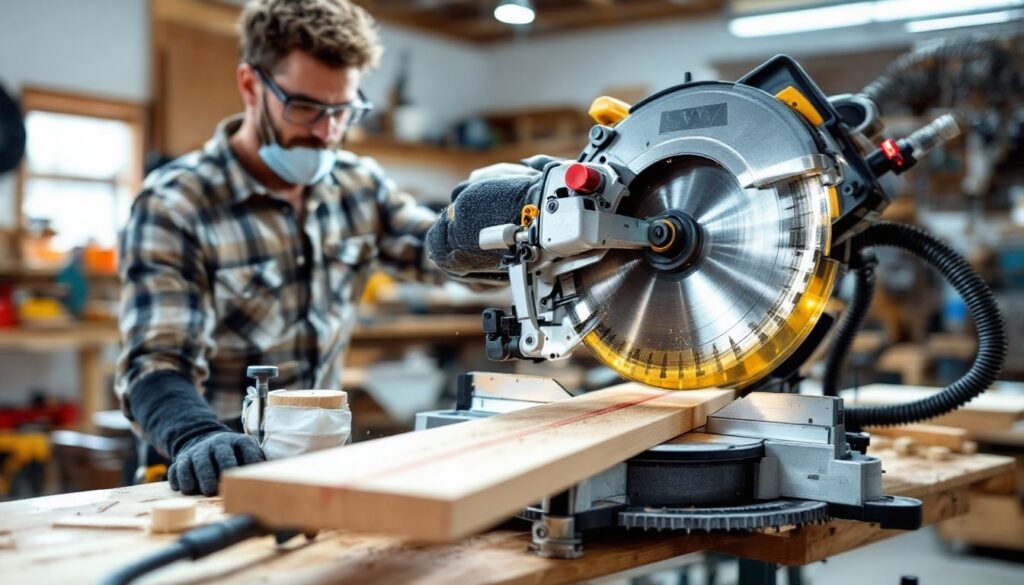
Ripping is one of the most fundamental table saw operations a DIYer will encounter. Whether you’re resizing lumber for a bookshelf, breaking down rough stock, or creating consistent strips for a frame, the rip cut, a lengthwise cut parallel to the grain, is the workhorse of woodworking. But there’s a difference between making a cut and making one safely, cleanly, and repeatably. Understanding how wood is cut when ripping with a table saw, from blade configuration to hand positioning to avoiding common pitfalls, separates a smooth project from a frustrating one, or worse, an injury.
Table of Contents
ToggleKey Takeaways
- A rip cut with a table saw runs parallel to the wood’s grain, requires proper fence alignment, and demands steady feeding technique to avoid kickback and ensure clean, usable material.
- Always position your hands 4-6 inches from the blade during the initial feed, then use a push stick for the final 8-10 inches to keep fingers safely out of the danger zone.
- Your table saw blade should be sharp, clean, and positioned just 1/8 to 1/4 inch above the workpiece; a dull blade causes binding, friction, and serious safety hazards.
- Never stand in line with the blade, use the fence as your primary guide (not the miter gauge), and always install and properly align the riving knife to prevent the kerf from closing on the blade.
- Feed the wood at a steady pace (about one foot per second for softwood) without rushing; if the blade sounds strained or the wood chatters, stop immediately to check for binding or debris before continuing.
Understanding The Ripping Process And Why It Matters
A rip cut runs parallel to the wood’s grain, along the length of the stock. The table saw blade cuts straight down through the wood from the top, removing a thin slice, the kerf, as it rotates. Unlike crosscutting (cutting perpendicular to the grain), ripping often means feeding longer, narrower pieces, which demands different techniques and setups.
Why does technique matter? A messy rip cut wastes material, requires extra sanding or hand planing, and can jam in the blade, causing kickback, the wood violently ejecting back toward the operator. A clean, controlled rip cut means you get usable material immediately and you keep all your fingers. The fence is your primary guide for ripping, not the miter gauge: it keeps the wood at a fixed distance from the blade, ensuring consistent width throughout the cut.
Essential Setup And Safety Preparations Before You Begin
Before touching the saw or the wood, your setup and mindset are critical. Always wear safety glasses or a full face shield to protect against dust and debris ejected during the cut. If the saw produces significant dust, a respirator rated for fine particles is wise. Hearing protection, foam earplugs or earmuffs, is a smart move since table saws are loud and sustained exposure damages hearing.
Check your blade. The blade should be sharp and clean: a dull blade binds in the wood, creates friction, heat, and kickback risk. The blade should be 1/8 to 1/4 inch above the workpiece at full height, not screaming at full vertical capacity. A blade that’s too high throws more dust and splinters, and offers less control. If your blade is chipped, cracked, or warped, replace it. Trying to save $20 in blade cost by pushing a bad blade isn’t worth a trip to the emergency room.
Make sure your rip fence is parallel to the blade and locked tight. A misaligned fence means the back of the blade creeps closer to the wood than the front, binding and kicking. Check this with the blade unplugged and off: measure from the fence to the blade near the front and back. Measurements should match within 1/32 inch over an 8-inch depth.
Configuring Your Table Saw For Ripping
Square your fence to the blade and table. Most fences have adjustment screws on the back or sides: loosen one side, align with a straightedge or accurate measurement, and tighten. Lock the fence position using the lever or clamp, depending on your saw.
Mark your desired rip width on the fence or use a stop block clamped to the fence to ensure repeatable cuts. If you’re ripping multiple pieces to the same width, a stop block, a wooden block clamped perpendicular to the fence, lets you butt each piece against it and fence, cutting identically without measuring each time.
Ensure the blade guard and riving knife or splitter are installed and adjusted properly. The riving knife sits just behind the blade and prevents the kerf from closing on the blade as wood heats and moves. It’s your first line of defense against kickback. Check that it’s aligned with the blade and doesn’t wobble.
The Step-By-Step Ripping Technique That Delivers Clean Cuts
Setup is done: now for the cut itself. Feed the stock straight and at a steady pace, rushed feeding asks the blade to work harder, generates heat, and can cause binding. The blade should do the work, not brute force.
-
Align and secure: Stand to the side of the blade (never in line with it, that’s kickback territory). Hold the wood firmly against the fence and table with both hands, keeping your fingers away from the blade path.
-
Start the feed: Push the wood steadily forward, maintaining pressure against the fence. Your hands should be 4-6 inches from the blade. Don’t rush: let the blade chew at its own speed.
-
Middle section: As the wood moves through, keep one hand pushing forward and one hand maintaining sideways pressure against the fence. Your pace should be smooth and deliberate, about one foot per second for softwood, slightly slower for hardwood.
-
End of the cut: When the trailing end of the stock approaches the blade within 6-12 inches, stop pushing with your front hand. Use a push stick or a featherboard to complete the cut. A push stick is a simple wooden tool with a notch: it hooks over the top of the stock and pushes it through while your hands stay far from the blade. Featherboards, devices with spring fingers, bolt to the table and hold the stock against the fence.
-
Finish: Let the wood pass fully through and come to rest beyond the blade before reaching back. Never reach across or under a spinning blade.
Hand Positioning And Material Movement
Hand position is where ripping either feels comfortable and safe or accident-prone. Both hands start in front of the blade, pushing and steering. As the cut progresses, your feed hand (the one closest to the blade) pushes forward while your other hand maintains pressure against the fence to keep the stock tight.
Once you’re within 8-10 inches of the blade, your hands must exit the danger zone. This is where the push stick comes in, it extends your reach safely. A push stick can be as simple as a 12-inch length of 1×4 with a notched end that grabs the workpiece, or you can buy adjustable versions. The goal is to keep your fingers 6+ inches from the blade at all times during the cut.
The wood should move smoothly and uniformly. If it chatters, slows, or the blade sounds strained, stop immediately. Check for binding, a dull blade, or debris caught in the kerf. Forcing a bind risks violent kickback: it’s better to stop, investigate, and restart than to muscle through and end up hurt.
Common Mistakes And How To Avoid Them
Even experienced woodworkers slip into bad habits. Ripping without a fence is a fast way to misalignment and disaster. Always use the fence. The miter gauge is for crosscutting: it has no place in ripping. Using both the fence and miter gauge at once locks the wood and guarantees a bind.
Standing in line with the blade is the quickest path to a serious injury if kickback occurs. The wood can exit the back of the saw at chest height with enormous force. Always stand to the side, with your hands positioned so the blade path is clear of your body.
Not using a push stick on the final pass kills or seriously maims a surprising number of DIYers every year. There is no exception to this rule. If your fingers would be within reach of the blade, use a push stick. Period.
Feeding too fast is another common error. You hear the blade struggling, the cut is rough, and you might have chatter marks on the wood. A sharp blade at the correct height should cut smoothly and quickly without force. If you’re struggling, check the blade, lower it slightly, or move more slowly.
Leaving the blade at full height is unnecessary. A blade just 1/4 inch above the workpiece is safer, throws less dust, and delivers cleaner cuts than one at full height. Adjust the blade height for each material thickness.
Resource articles like woodworking project plans and DIY repair tutorials offer additional setup and safety guidance for table saw work. Also, hands-on DIY tutorials provide visual walkthroughs that complement written instructions.
If your saw doesn’t have a riving knife or the system is broken, repair it before using the saw. Old contractor saws or cheaper models sometimes lack this critical safety feature. The extra cost or effort to retrofit or upgrade is trivial compared to the injury risk.
Conclusion
Ripping with a table saw is a learnable skill that, once mastered, becomes second nature. The setup, fence alignment, blade height, guards, and riving knife, takes care of 80% of the work. The technique itself is straightforward: feed straight, steady, and safely, using a push stick for the final stretch. Respect the tool, follow the rules, and ripping becomes one of the most reliable and satisfying cuts in the shop.